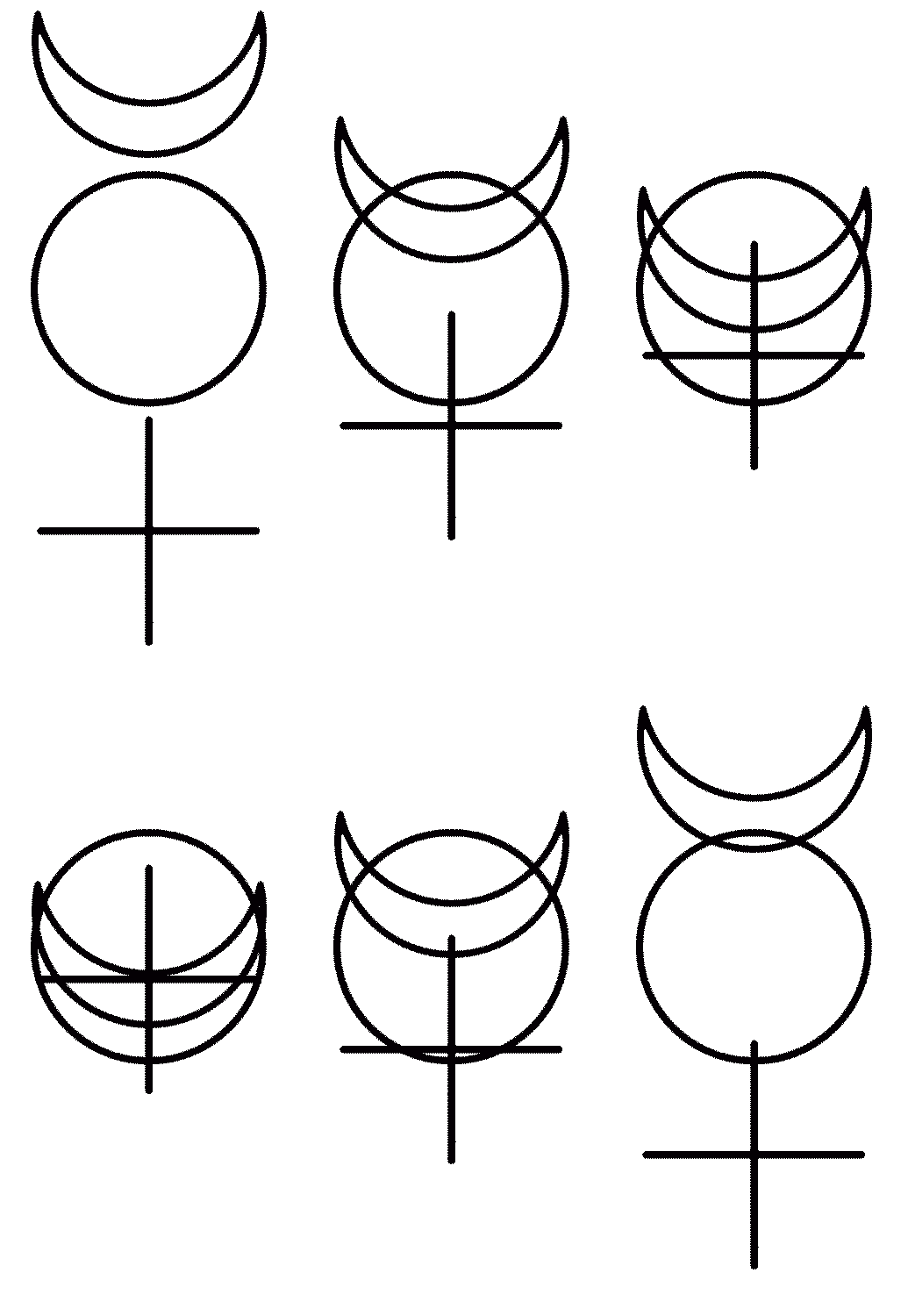
Detailed_analysis_reveals_intriguing_symbolism_within_goldhorns_and_their_creati
- Detailed analysis reveals intriguing symbolism within goldhorns and their creation
- The Materials and Techniques of Creation
- The Role of Ornamentation and Symbolism
- Cultural Contexts and Archaeological Discoveries
- The European Iron Age: Torcs and their Significance
- Comparative Analysis: Similar Objects Worldwide
- The Moche Culture of Peru: Gold and Power
- The Preservation and Conservation of Goldhorns
- Future Research and Emerging Technologies
Detailed analysis reveals intriguing symbolism within goldhorns and their creation
The term “goldhorns” evokes a sense of mystique and ancient artistry, conjuring images of intricately crafted objects steeped in cultural significance. While perhaps not a widely recognized term in mainstream art history, it represents a fascinating area within the study of material culture, particularly relating to ceremonial objects and ornamentation often associated with prehistoric and early historic societies. Examining the creation and symbolism embedded within these artifacts provides valuable insights into the beliefs, social structures, and technological capabilities of past civilizations. Understanding the context surrounding these pieces is crucial to appreciate their true meaning and artistic merit.
These objects, generally crafted from precious metals—though the term doesn’t strictly require gold—often take the form of headgear, adornments for statues, or decorative elements for ritualistic tools. Their survival through millennia, often discovered in archaeological contexts, necessitates a careful approach to their interpretation. The potential for contamination of the archaeological record, misinterpretations of function, and the sheer difficulty of reconstructing the beliefs of long-lost cultures all contribute to the complexity of deciphering the stories these “goldhorns” tell us.
The Materials and Techniques of Creation
The creation of objects referenced as “goldhorns” demanded a sophisticated understanding of metallurgy, even in the earliest periods of their production. The extraction of gold, or other desired metals, required knowledge of geological formations and the laborious processes of mining and refining. This often involved extensive trade networks to acquire the raw materials themselves, indicating established economic systems and intercultural exchange. Beyond the acquisition of the metal, the techniques employed in shaping and decorating these pieces demonstrate a remarkable level of skill. Hammering, annealing, and lost-wax casting were common methods used to create the desired forms, showcasing a mastery of craftsmanship passed down through generations. The sheer precision achieved, even with limited tools, is testament to the dedication and artistry of ancient metalworkers.
The Role of Ornamentation and Symbolism
Beyond the technical mastery exhibited in their creation, “goldhorns” were frequently adorned with intricate designs and symbols. These embellishments weren’t merely decorative; they served as powerful visual statements communicating complex religious, social, or political messages. Geometric patterns, animal motifs, and anthropomorphic representations were commonly employed, each carrying specific connotations within the relevant cultural context. Determining the precise meaning of these symbols requires careful analysis of archaeological evidence, comparative studies with similar objects from the same period and region, and, where possible, interpretations based on surviving texts or oral traditions. The presence of specific animal representations, for instance, could signify clan affiliations, totemic beliefs, or the veneration of particular deities. The level of detail in the ornamentation often reflects the status and importance of the object and its owner.
| Gold, Silver, Bronze | Hammering, Annealing, Lost-Wax Casting, Repoussé | Animal Motifs, Geometric Patterns, Solar Discs, Fertility Symbols | Europe (e.g., Celtic Torcs), Middle East (e.g., Mesopotamian Headdresses), South America (e.g., Moche Headdresses) |
| Copper Alloys | Cold Hammering, Riveting, Inlay | Spirals, Interlacing Patterns, Abstracted Figures | Scandinavia (e.g., Viking Age Artefacts), North America (e.g., Copper Rattle) |
The use of different materials also contributed to the symbolism. Gold, for instance, was often associated with the sun, divinity, and immortality, while silver could represent the moon or feminine principles. The choice of material wasn’t arbitrary, but rather a deliberate act intended to enhance the object's power and meaning.
Cultural Contexts and Archaeological Discoveries
The archaeological record provides crucial evidence regarding the cultural contexts in which “goldhorns” were created and used. Discoveries from burial sites, temple complexes, and hoards offer insights into their ritualistic functions and social significance. For example, the presence of these objects in high-status graves suggests that they were associated with elites and played a role in funerary rituals. Their association with religious structures indicates their importance in ceremonial practices. The location where an artifact is found—along with accompanying artifacts—often provides vital clues about its intended purpose and the beliefs of the people who created it. Careful excavation and documentation are essential to preserve the integrity of these archaeological contexts and maximize the information derived from them. Unfortunately, looting and illegal trade in antiquities pose a significant threat to the preservation of this cultural heritage, making responsible archaeological practice even more critical.
The European Iron Age: Torcs and their Significance
A particularly well-studied example of objects that fall under the general umbrella of “goldhorns” are the torcs found across Europe during the Iron Age. These neck ornaments, often crafted from twisted gold or silver, were particularly prominent among the Celtic peoples. Torcs were not simply decorative items; they held deep symbolic meaning, representing status, power, and religious belief. Archaeological evidence suggests that they were worn by warriors, priests, and members of the elite, signifying their position within society. The intricate twists and terminals of the torc may have symbolized the connection between the earthly and spiritual realms, or represented powerful animal spirits. The craftsmanship of these torcs also demonstrates the sophistication of Celtic metalworking techniques, showcasing their ability to manipulate and transform precious metals into objects of enduring beauty and cultural significance.
- Torcs were frequently found in burials, suggesting an afterlife belief.
- The weight and complexity of a torc likely indicated the wearer’s status.
- Different regions developed unique styles of torc decoration.
- Some torcs were deliberately broken or deformed, possibly as part of a ritual.
- The metal itself was likely considered to possess inherent power.
The study of torcs provides a fascinating case study in how we can interpret the symbolism and social significance of “goldhorns” based on archaeological evidence and comparative analysis.
Comparative Analysis: Similar Objects Worldwide
While the term “goldhorns” might initially evoke images of European artifacts, similar objects have been discovered in diverse cultures across the globe. From the elaborate headdresses of ancient Mesopotamia to the gilded ornaments of pre-Columbian South America, the human desire to adorn oneself with precious metals and imbue objects with symbolic meaning appears to be a universal phenomenon. Comparing these artifacts allows us to identify common themes and patterns, as well as unique cultural variations. For example, the emphasis on animal motifs in Siberian shamanic headdresses echoes the use of animal representations on Celtic torcs, suggesting a shared belief in the power of the natural world. However, the specific animals depicted and the stylistic conventions employed differ significantly, reflecting the specific ecological and cultural contexts of each region. Recognizing both the similarities and differences between these objects helps us to understand the broader human story behind their creation.
The Moche Culture of Peru: Gold and Power
The Moche civilization, which flourished along the northern coast of Peru between the 1st and 8th centuries AD, produced stunning examples of gold ornaments, including elaborate headdresses, pectorals, and ear spools. These objects were not merely symbols of status, but were intimately connected to the Moche’s complex religious beliefs and hierarchical social structure. The Moche rulers, often depicted in their iconography wearing elaborate gold attire, were seen as intermediaries between the human and divine realms. The gold itself was believed to possess inherent power, and its use was carefully controlled by the elite. The Moche artisans demonstrated exceptional skill in metalworking, utilizing techniques such as lost-wax casting and hammering to create intricate designs and realistic depictions of animals and humans. The discovery of royal tombs filled with gold ornaments provides invaluable insights into the Moche’s worldview and the symbolic language of their art.
- Moche goldwork was often associated with rituals and ceremonies.
- The depiction of animals and humans in gold reflected their importance in Moche cosmology.
- Gold ornaments were used to signify the power and authority of the ruling elite.
- The craftsmanship of Moche goldwork exemplifies their advanced metallurgical skills.
- Moche gold artifacts provide valuable insights into their religious beliefs.
The similarities in the use of precious materials and symbolic ornamentation across disparate cultures highlight the common human need to express identity, belief, and power through material culture.
The Preservation and Conservation of Goldhorns
The long-term preservation of “goldhorns” presents significant challenges. The inherent fragility of precious metals, coupled with the corrosive effects of soil conditions and environmental pollutants, necessitates careful conservation efforts. Archaeological finds often require immediate stabilization to prevent further deterioration. This may involve cleaning, consolidation, and the removal of harmful corrosion products. Ongoing monitoring of environmental conditions—temperature, humidity, light exposure—is crucial to ensure the long-term stability of these artifacts. Furthermore, proper storage and display practices are essential to protect them from damage and theft. Collaborative efforts between archaeologists, conservators, and museum professionals are vital to ensure that these cultural treasures are preserved for future generations. The ethical considerations surrounding the repatriation of cultural artifacts also play a key role in ensuring their preservation within their original cultural contexts.
Future Research and Emerging Technologies
The study of “goldhorns” continues to evolve with the development of new technologies and research methodologies. Advanced analytical techniques, such as X-ray fluorescence (XRF) and scanning electron microscopy (SEM), allow researchers to determine the chemical composition of the metal alloys used in their creation, providing insights into the sourcing of materials and the techniques employed by ancient metalworkers. Digital imaging and 3D modeling enable the creation of detailed virtual reconstructions of damaged or fragmented artifacts, facilitating their study and interpretation. Furthermore, interdisciplinary approaches that integrate archaeological evidence with historical linguistics, anthropology, and art history offer a more holistic understanding of the cultural contexts in which these objects were created. Ongoing research promises to uncover new discoveries and refine our understanding of the symbolic significance and social roles of “goldhorns” across different cultures and time periods. Establishing a unified, accessible catalogue of these objects, incorporating detailed documentation and analysis, is a key priority for the future of this field.