Category: Cream Bar Circle

  • Stay evergreen

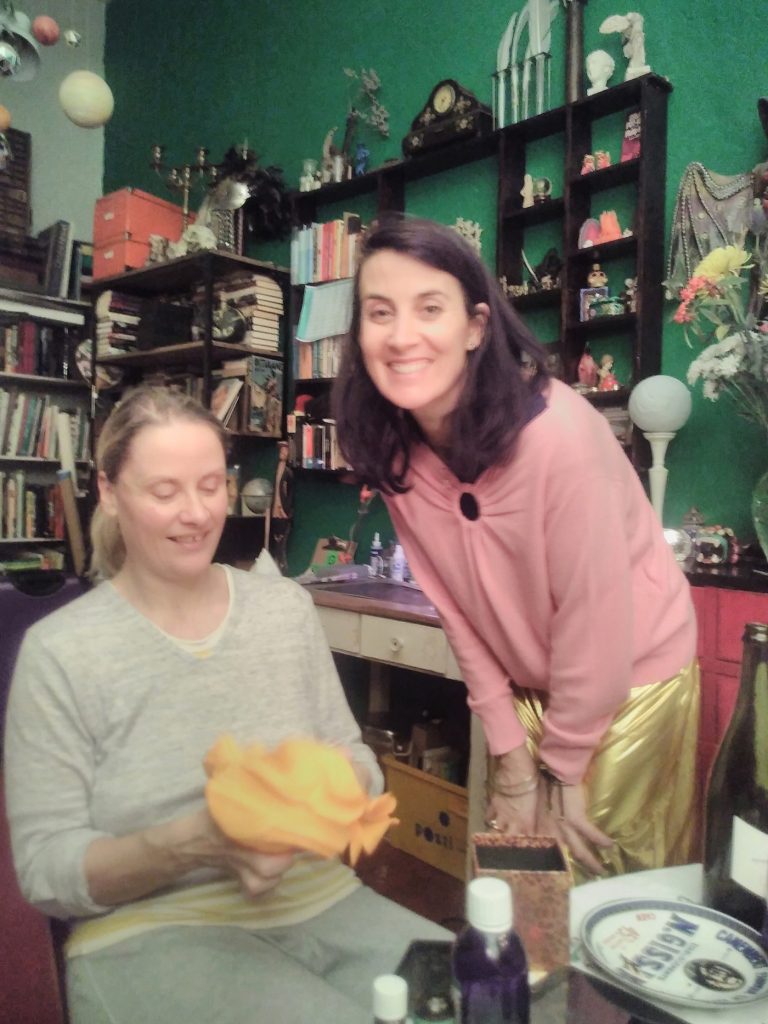
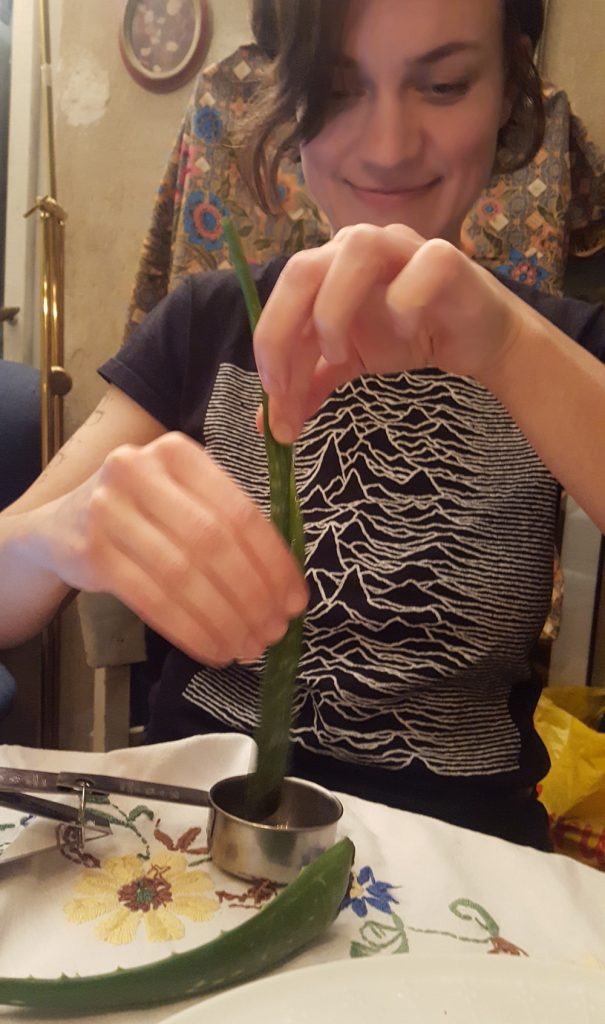
    Our last for the year Cream Bar Circle gathering, was festive of cookies, sweet cacao celebration, with bubbly feelings in the air. Everyone was little tired from the year, but eager to mix few fast home made beauty recipes. The team for the event was green. We wanted to make easy recipes from freshly squeezed aloe vera and add some scrubs and cleansers for seasonal purification. 

    The dark hours in the winter time are suitable for deep salty warming baths and anything that keeps the spirit evergreen. Aloe vera is a perfect moisturizer, perhaps not suiting for winter face cream in the cold weather, but anything cleansing and hydrating is made with the soothing aloe magic.

    I also had some extra French green clay, which we decided to experiment with. I used the French green clay for the making of face mask with French lavender and was instantly in love with this deep cleansing green mixture.
     

    French Green Clay?

    French Green Clay is also known as Green Montmorillonite Clay. It is a soft, mineral-rich clay that is found in and named after Montmorillon, a commune located in western France. French Green Clay was first mined in France (hence its name), but now has been found, and mined, in other clay deposits in the Western US, China, and elsewhere in Europe. French Green Clay is sometimes also called Sea Clay.

    It’s rich in minerals including iron, magnesium, selenium, silicon, phosphorus, calcium, manganese, and copper. French Green Clay is a strong drawing agent; it is excellent at absorbing oil and removing impurities from the skin, and it holds nearly its weight in water. This clay rejuvenates the skin while it exfoliates and helps remove oil, dirt and debris. It promotes glowing skin that looks smoother, softer and healthier.

    French Green Clay is rich in important minerals and is a highly absorbent clay that can be used in facials, body wraps, soaps, deodorizing body/foot powders. French Green Clay can also be used in the formulation of hair pastes and other hair care products that help to naturally cleanse the hair and scalp. As a highly absorbent clay, it is not recommended for use in skin care products intended for frequent use by those with dry or sensitive skin/hair.

    French green clay has been reported to:

    • Absorb oil/remove impurities
    • Smooth skin
    • Deliver nourishing minerals to skin
    • Increase circulation
    • Tighten pores
    • Calm skin inflammation
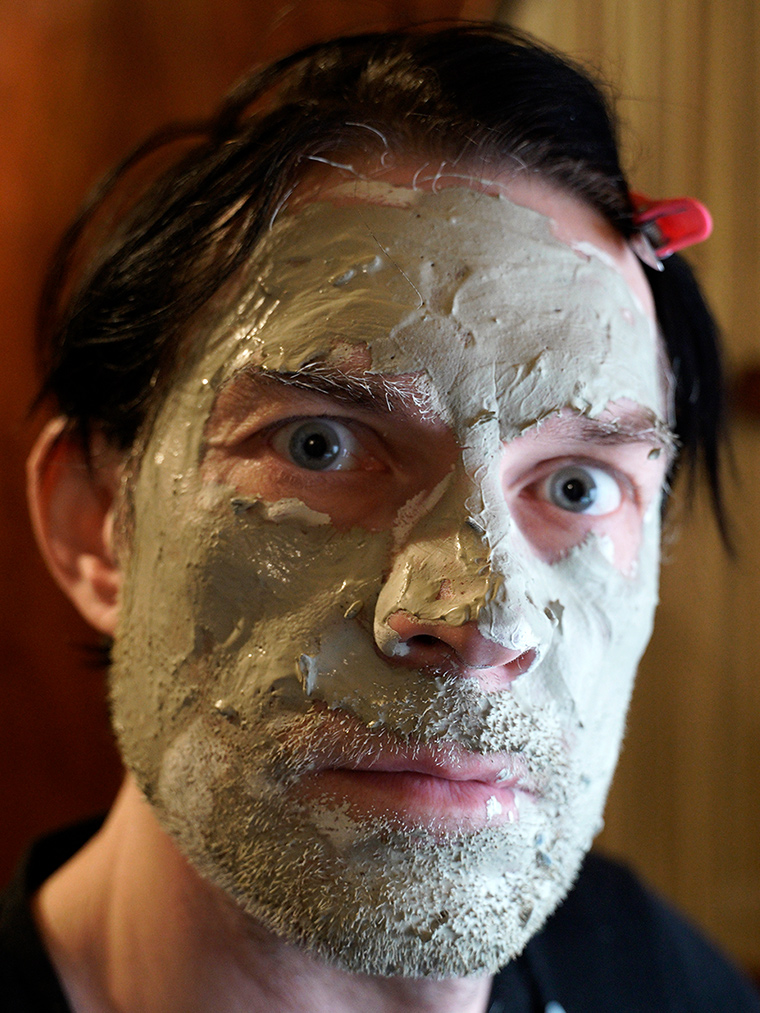
    My clay mask supporting test bunny

    Green Days

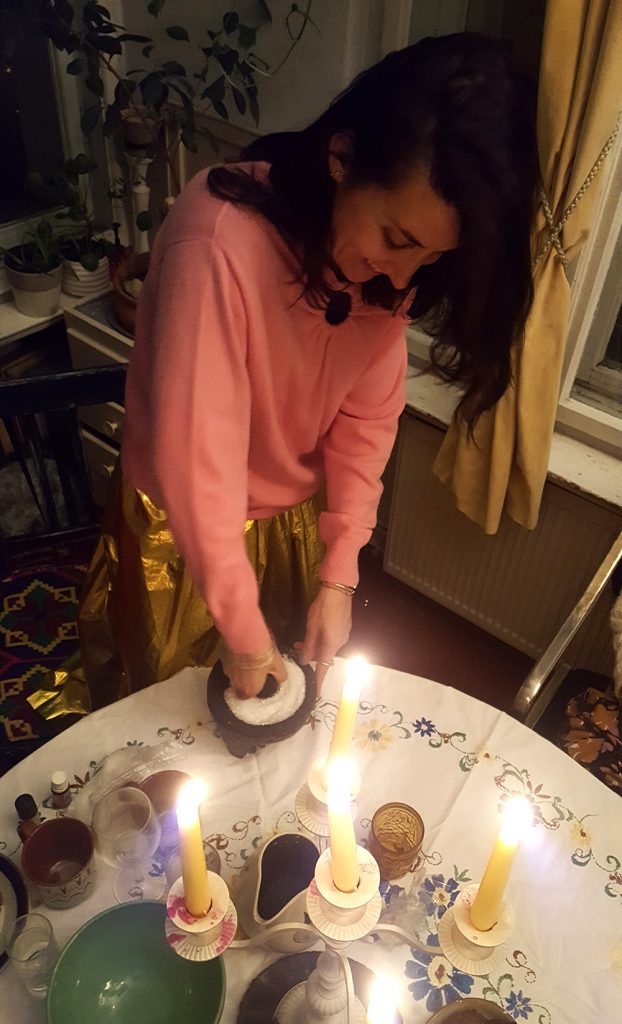
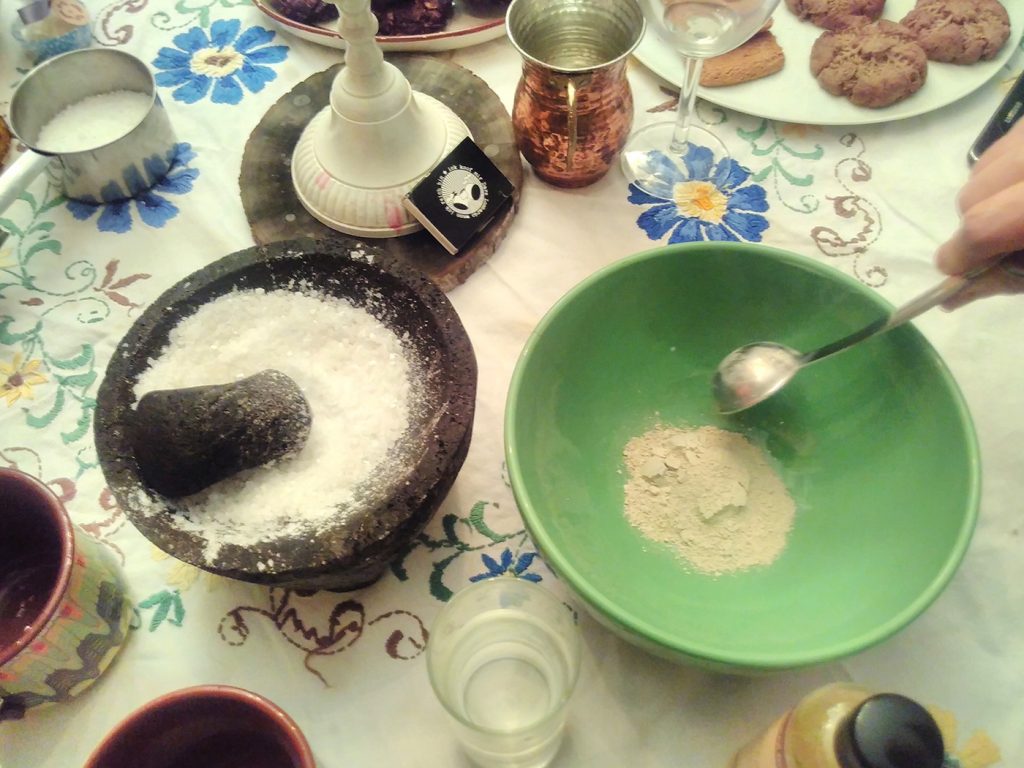
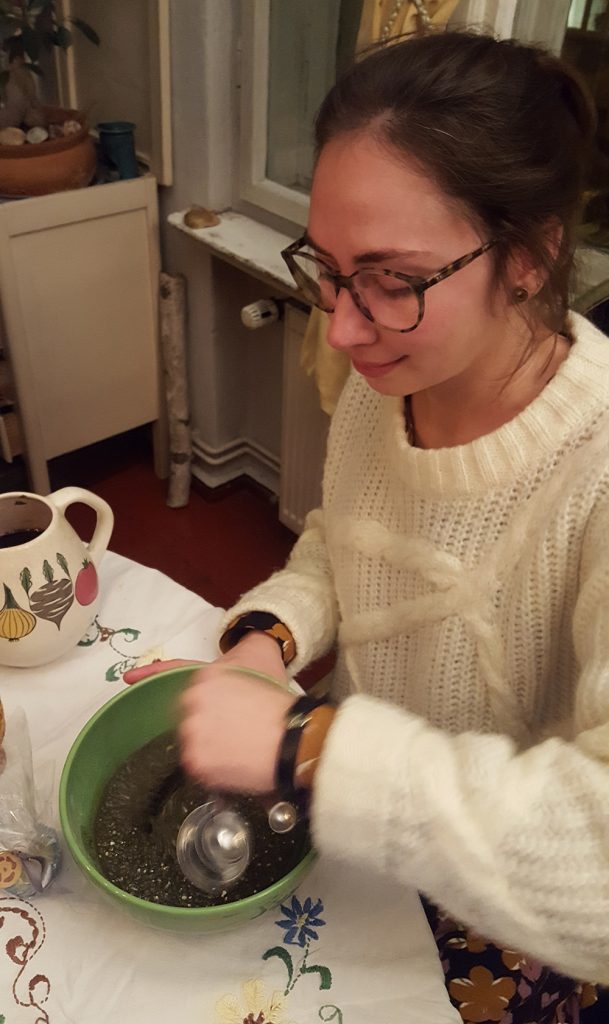
    In the making of body scrub recipe with French Green Clay we decided to use Dead Sea salt. Denitsa had to crush the salt with the molter until finer. For me, the Dead Sea salt has extreme warming active effect and is not particularly suiting for my sensitive skin. This effect is less dramatic, when the scrub is applied with bath glove or sponge under shower and massaged gently. I would still recommend to use finer salts, such as pink or Icelandic flakes salt.

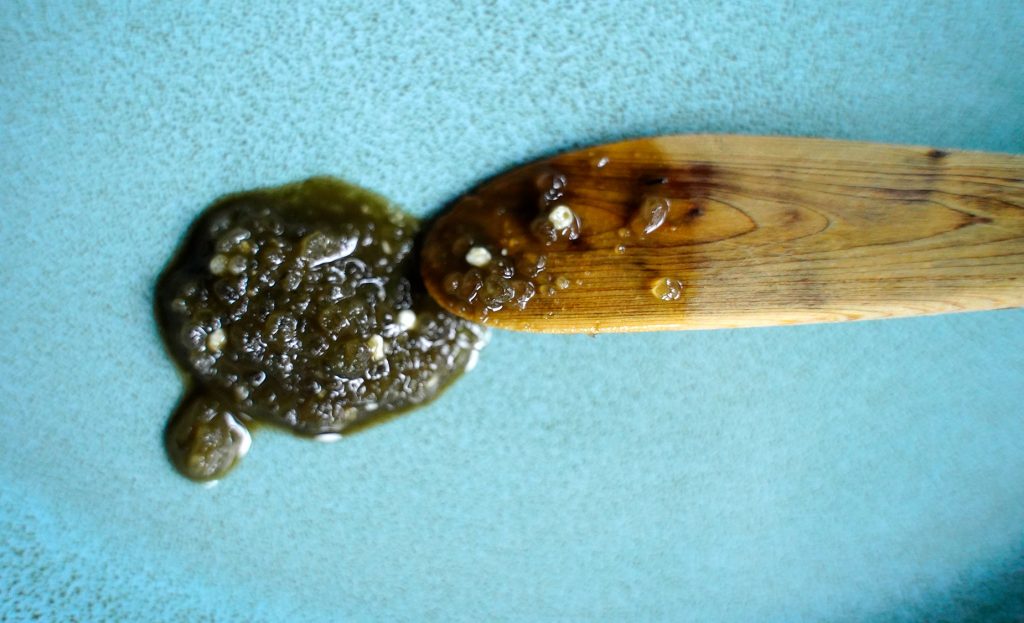
    We also swapped the Camellia Oil with Jojoba Oil. I would recommend if exchanged, the oil should be with about 85% fatty acid oil composition. The matcha tea added wonderful texture greenness to the mix and made perfect sense as it has wonderful skin properties on its own. Matcha is an excellent ingredient for the skin as well. Matcha is anti bacterial and contains incredibly high levels of epigallocatechin gallate (EGCG), which is helpful in reducing inflammation and to even skin tone. The antioxidants are also known for reducing acne and increasing skin elasticity.

    • Matcha is rich in chlorophyll which is a natural detoxifier and helps to remove toxins from your skin and body.
    • Matcha contains high levels of catechins, which are a potent antioxidant and help to fight the processes that cause free radicals and prevent poor health.
    • Matcha helps to absorb and prevent excess oil and sebum on your skin, which can help to reduce the appearance of acne and blackheads.
    • Matcha naturally produces energising properties, which helps to stimulate skin cells and blood flow to help reduce the effects of ageing.
    • Matcha contains more antioxidants than dark chocolate, spinach and fruits like acai combined.
    • Matcha contains a number of important nutrients, including iron, protein, potassium, calcium and vitamin C.
    • Matcha contains L-Theanine, an amino acid that supports relaxed and smooth skin.
    • Matcha contains anti-inflammatory properties to help reduce the appearance of skin conditions and support radiant skin.
    Feeling like a mermaid

    Green Tea & Salt Body Scrub

    This recipe uses Palmarosa and Peppermint essential oils. We decided to go for the same Essential Oil combination, which gave extra refreshing note to the aroma. Both oils are known for their headache pain relieving properties.

    Makes one 8-ounce (240 ml) jar.

    Ingredients:
    3/4 cup (210 grams) small grain sea salt
    3 ounces (90 ml) camellia oil
    1 tablespoon (15 grams) French green clay
    1 tablespoon (15 grams) matcha green tea powder
    1/4 teaspoon (1.25 ml) palmarosa essential oil
    1/8 teaspoon (0.65 ml) peppermint essential oil

    Directions:
    Combine dry ingredients in mixing bowl and stir well. Break up any lumps in the salt or powders. Blend camellia oil with essential oils in a small container, then add to dry ingredients. The texture of the scrub can be adjusted by adding all, or only a portion of the liquid phase to the dry. Mix ingredients well and transfer to jar (or use immediately).

    I store my jar tightly closed in the bathroom. There are no ingredients that can mold easily, unless much of water is added, while used. The scrub leaves my skin deeply purified and has wonderful calming and toning effect. My fair skin, does not like salt scrubs very much, so I massage it gently and avoid all the sensitive skin areas of my body.
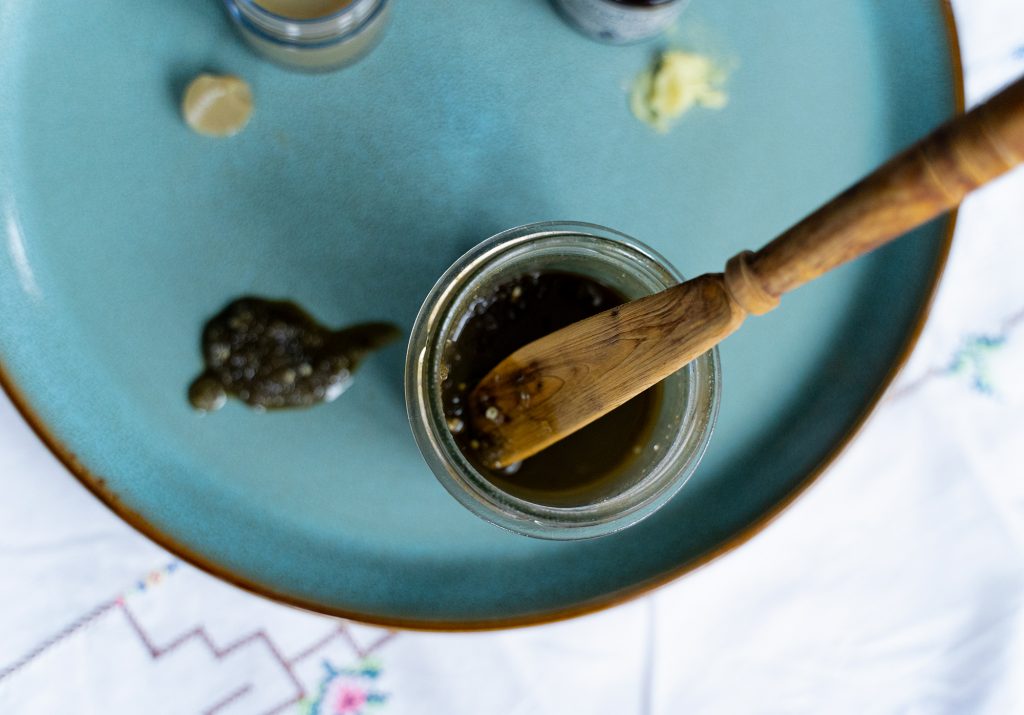
    Home made and yummy

    French Green Clay Deodorant

    Lavender Bergamot Deodorant Recipe
    © Rebecca Dawn Dillon

    It is interesting that, French green clay obtains its light green color from naturally occurring iron oxide and decomposed plant material – the same life cycle that the earth uses to regenerate herself. In turn, its soft texture and elemental composition lends itself well to a variety of skin care preparations.

    Ingredients:
    6 oz. arrowroot powder
    3 oz. magnesium hydroxide
    1 oz. French green clay
    2 oz. cocoa butter
    2 oz. baobab oil
    0.5 oz. 100% neem oil
    0.5 oz. refined shea butter
    1/2 teaspoon beeswax pastilles
    0.1 oz. lavender essential oil
    0.05 oz. bergamot essential oil

    Instructions:
    To make my lavender bergamot deodorant recipe with French green clay, begin by weighing out the cocoa butter and shea butter into a large glass Pyrex measuring cup or glass bowl. (It’s important to note that refined shea butter has a higher melting point than unrefined shea butter. Therefore substitutions may cause variations in the recipe.)

    Next, measure out a level teaspoon of the beeswax pastilles and add it to your container. Melt these ingredients on a double boiler. Once melted, weigh out the baobab oil and neem oil. Stir these oils into the melted butters and wax. (If needed, you can gently heat the deodorant mixture again then mix well to combine.) I used substituted the oils with infused oils, which I have made some months ago. I used chamomile coconut oil and rice bran rose petal oils. It is possible to replace the baobab and neem oil, with any carrier oil, preferably with dryer kind of oils such as hemp or jojoba oil. But the nice effect of neem oil is in its antibacterial properties.

    While the lavender bergamot deodorant mixture is still hot, weigh out and stir in the arrowroot powder, French green clay and magnesium hydroxide. Mix well to combine. I did not have magnesium in powder form, so I used magnesium oil instead. If this is the case, it is advisable to see the consistency of the mixture and add little extra arrowroot powder. I do not recommend to use the oil, but to find if possible the magnesium hydroxide powder.

    Then follow with the essential oils, weighing out the amounts first, then stir them into the deodorant mixture until thoroughly incorporated. Finally, pour your lavender bergamot deodorant into your desired containers of choice. My mixture turned little softer, but the result is perfect. I can do my yoga class and still be fresh whole day after. I store my deodorant in small travel jar and have bigger jar in my bathroom shelf. Avoid using with wet fingers, apply small dose under each armpit and wash hands after. Unless you find biodegradable paperboard jars or design your own eco-friendly package.
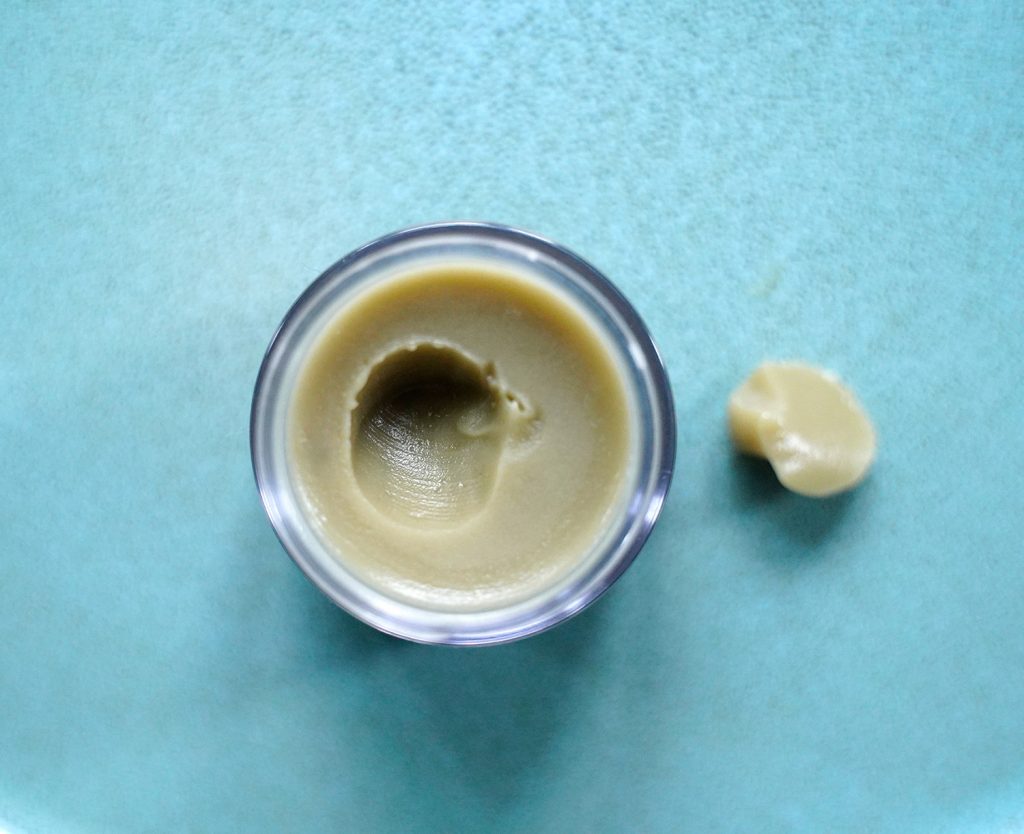
    Perfect protection, feels gentle and you will never want to use normal store deodorant again

    French Green Clay Mask

    Recipe by Bubmblebee Apothecary

    Ingredients:
    6 tbsp aloe vera gel
    6 tbsp French green clay
    6 tbsp white kaolin clay
    1 tsp lavender flowers
    1 tsp powdered St. John’s Wort
    12 drops lavender essential oil
    12 drops natural preservative (optional; use if you’re going to store mask at room temperature for more than a day or so)

    Instructions:
    Measure clays and aloe vera and mix together thoroughly. Add powdered herbs, essential oil, and preservative, if using. Mix well. Use immediately, or store in glass jar with lid for later use. I prefer storing mine in the refrigerator, so it lasts longer and it has less chance of developing germs.

    I find this French green clay mask, to have deep cleansing after effect on my skin. It leaves the skin circulation deeply restored, rosy and fresh. It is little too drying for my skin complexion, so I don’t apply it more than once a month.

    The best way to use is by covering thick layer over the face and neck area, avoiding the eyes. After about 15 minutes I wash it off by gently massaging the lavender bugs with the help of little warm water. It is good to apply rich face cream afterwords.
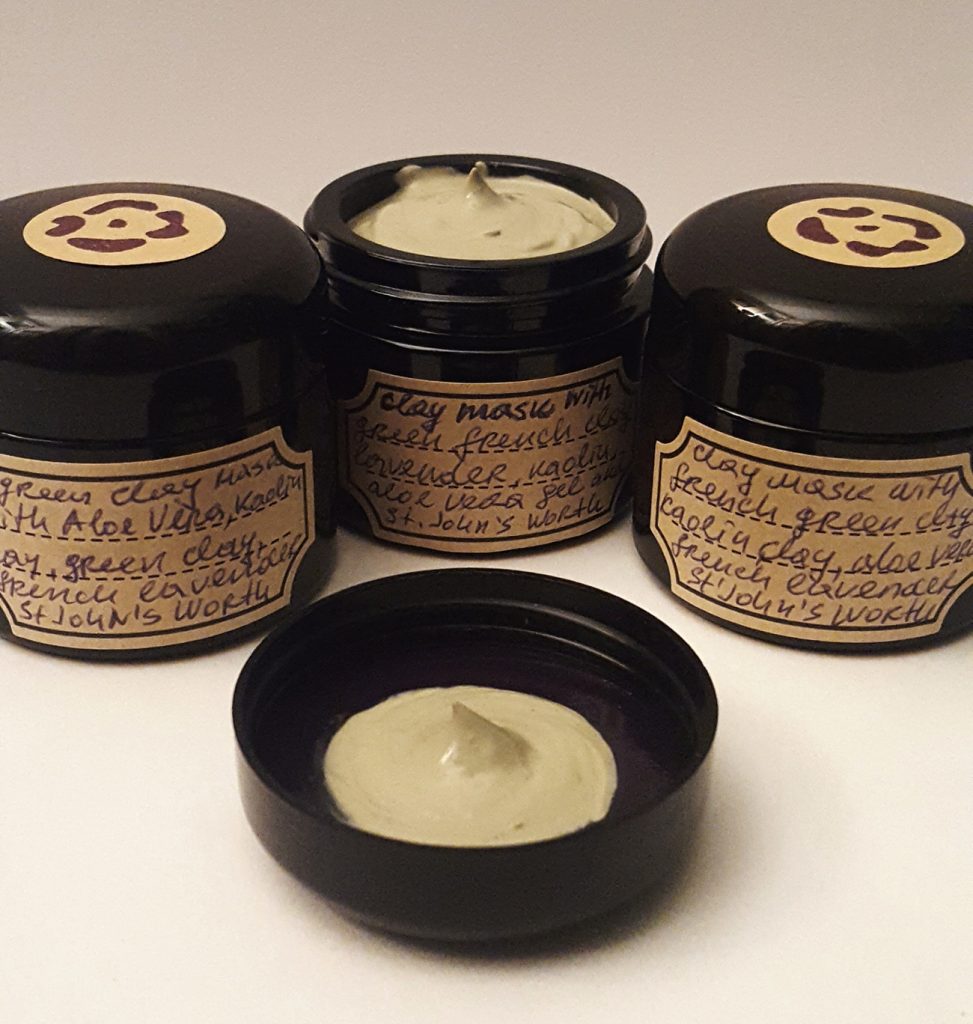
    Green Clay face mask, available upon request by Onca

    Are you fresh and clean and living in a forest dream? The symbolism of the Christmas tree is about youthfulness. To remain forever young, no matter how dark it gets around. The fountain of youth was depicted in many ancient cultures in the form of a fountain of course, but also a tree and also pine cone. Why pine cone? Firstly it comes from the evergreen trees, it carries the sacred golden ratio geometry and it has deep meanings in esoteric teachings. This teachings are connected to the cosmic theology and the human body. The pineal gland is the ultimate awakened lotus, which when once opened “inside us” brings enlightening awareness, which in its turn creates symbolic “eternal sunshine”. We are then living our full potential as cosmic beings.

    “We all have a ‘pineal gland’ located near the ‘centre’ of our brains. Pine cone shaped (hence its name), the pineal gland was once considered a ‘vestigial remnant’ of a larger organ – the Third Eye. The pineal gland is the only midline brain structure that is unpaired (azygous), tucked in a groove where the two halves of the thalamus join. Sitting thus precisely between the two hemispheres (behind the ‘third’ ventricle) it personifies the abstracts occult concept that we find our centre by balancing duality. Rene Descartes believed that the pineal gland to be the ‘principal seat of the soul’ and viewed it as the Third Eye. Descartes attached significance to the gland because he believed it to be the only section of the brain to exist as a single part rather than one-half of a pair.”
    ~Richard Cassaro

    Well, after you try this home made remedies, your skin, body and mind, would never think of ready commercial cosmetic shopping. There is pleasure, curiosity and realization in the process of creating your own hygiene compounds. Once taken this path brings to you to minimization of toxicity in life. More over it awakes new living needs and habits, which eventually lead to greener life. The life that we all, who are concerned of our green footprint want to participate in.

    This changes are slow, but easy to make and the ingredients, which I use are not difficult to find. I feel pampered and grateful to the people who wrote this recipes. It will take some time to contribute with my own creative recipes, but for now I enjoy sharing our experience, from trial and error. I also feel that last year was important new chapter in my life with the beginning of my own ONCA Ritual Offerings. Please like, share and enjoy.
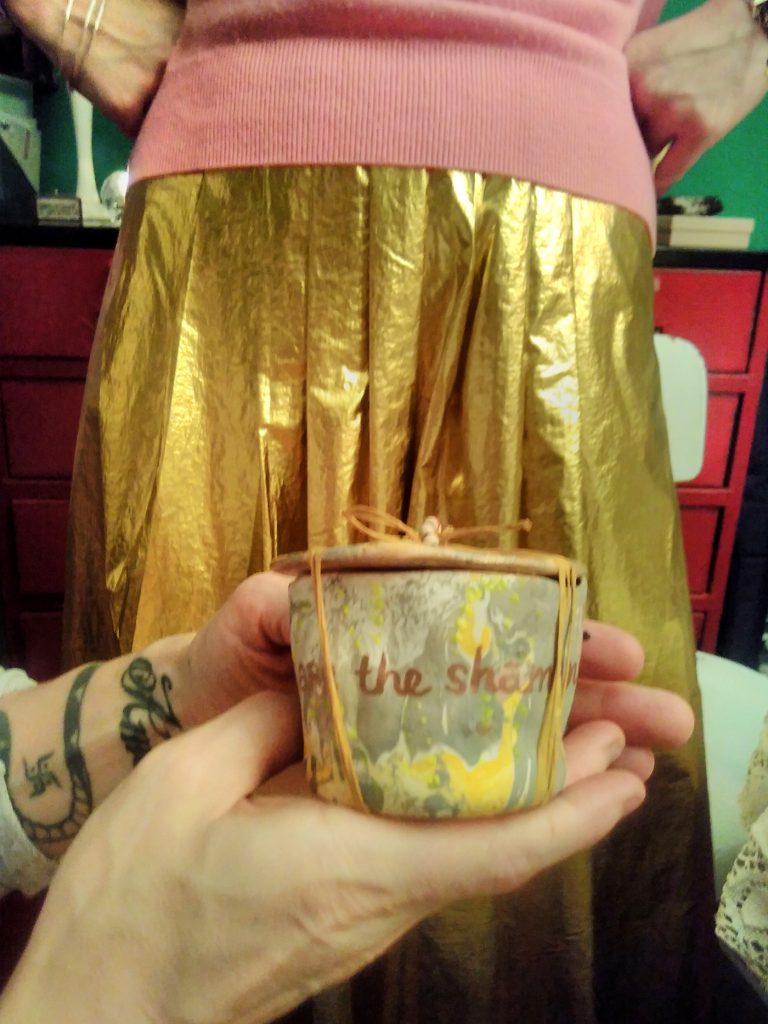
    Resources:
    https://zengreentea.com.au/matcha-helps-skin/
    https://www.naturalbeautyworkshop.com/my_weblog/2018/11/green-tea-palmarosa-salt-scrub.html
    https://www.nutritionalaesthetics.com/secrets-of-french-green-clay/
    https://www.naturalbeautyworkshop.com/my_weblog/2007/12/french-green-cl.html
    https://books.google.bg/books?id=g_WADwAAQBAJ&pg=PT2&lpg=PT2&dq=history+use+of+clays+in+beauty&source=bl&ots=9Lym-BbIhV&sig=ACfU3U1xKXzV6zBTYg6RE79pSLzOTiPEkw&hl=en&sa=X&ved=2ahUKEwis9ciYm-rmAhVI_CoKHUF7BowQ6AEwE3oECAoQAQ#v=onepage&q=history%20use%20of%20clays%20in%20beauty&f=false
     

  • Soap for Hunters

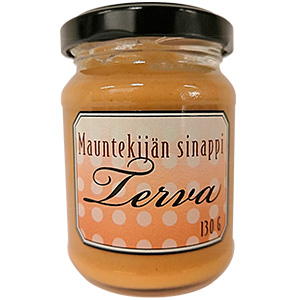
    Finnish pine tar mustard

    “Terva” is the Finnish word for tar and is related to the word “terve”, which translates to “healthy” or “hello”. In Finland tar is used for buildings, food products such as ice-cream, liquor, candy and even mustard with pine tar taste. Pine tar was just recently registered in the EU-chemicals list and it is interesting, that they don’t mention the creosote free tar used for cosmetics or foods production. I have eaten on daily bases Finnish pine tar candy called “Terva Lejona”, which translates to “Tar Lion”. Sounds like healthy lion to me.

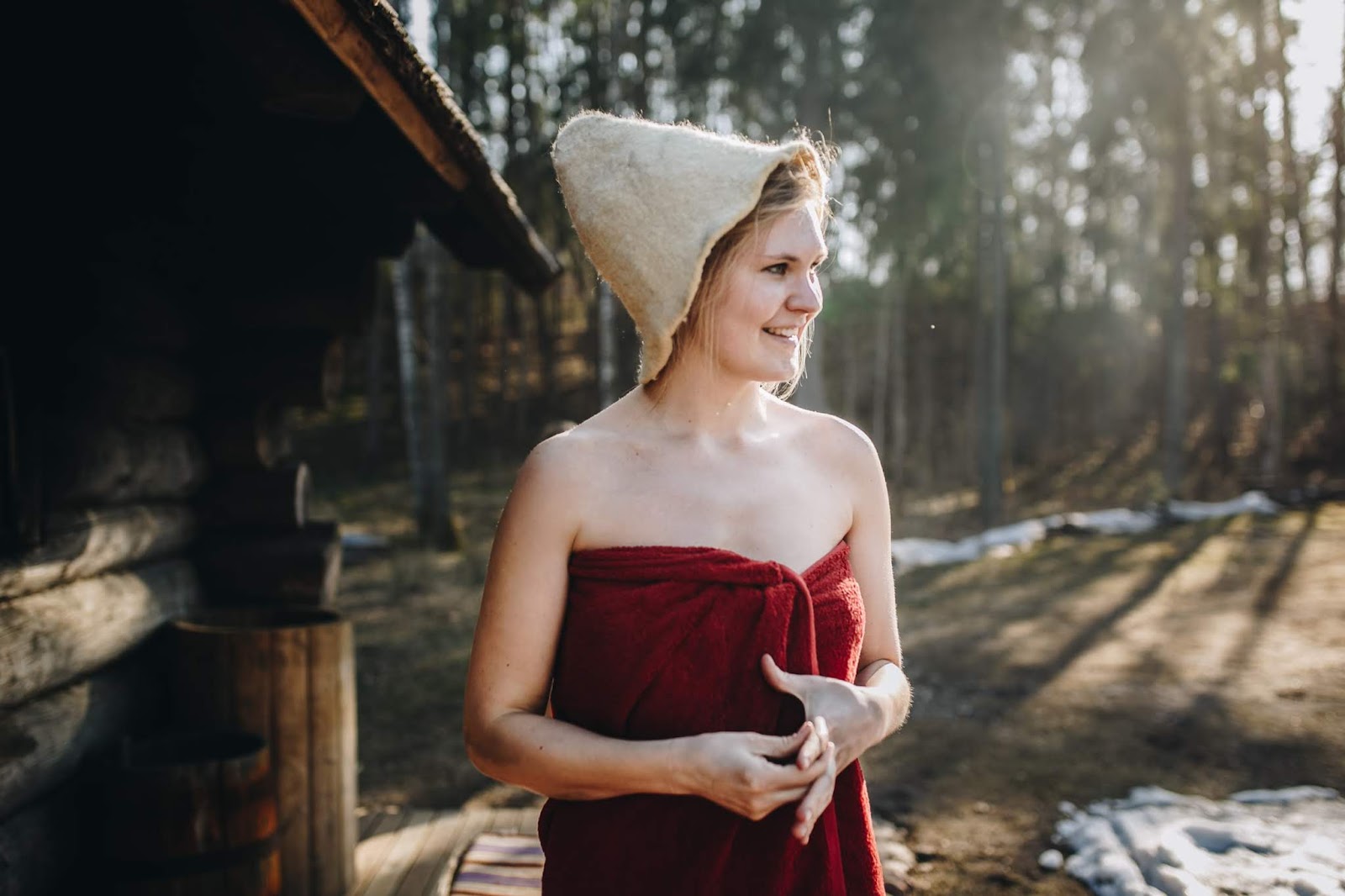
    First I came across pine tar while living in northern Finland, near the city of Oulu, which once was the main port for tar to reach foreign lands. Almost every Finnish sauna I seen, had soap or shampoo consisting pine tar. The smoky, leathery aroma was everywhere during the summer. It embodies memories from fire and wood, which fuel my soul. It is the kind of nostalgic scent, which fires engines, sails boats, rides horses, skiing on ice rooftops with long white beards.

    Finnish “Lion Tar” liquorice candy

    Fairies running naked through pine tree forests, falling asleep over silver moss. Clearly I miss Finland and the many natural clean aromas from the forest. In a world made of petroleum oil, wood seems like an element of deficiency in my city life. Another eco-friendly product I am not finding in Germany is the “Mäntysuopaa” liquid soap, which was perfect washing detergent for my carpets. I use to dry them on the sunny sea shore for couple of days and afterwords my whole room would have this pure, clean feel. Pine soap is the most commonly used alkaline washing liquid in Finland. The soup was made from pine oil extraction, which is a by-product of the pulp cooking. There is so much forest in Finland per capita, which gives the forest industry still major role. After the decline of paper production in recent years, new technologies have been developed for skin cream, snacks and plastic replacements from wood.

    Finnish pine soap “Mäntysuopa”

    The cream looks and feels like a normal, creamy soft cosmetic should. You wouldn’t think that it’s made from wood. The emulsifier used in the cream, or the component that binds water and oil, is hemicellulose, a by-product of the forest industry. Hemicellulose is a polysaccharide found in plant cell walls; it is a carbohydrate that in trees is responsible for their flexibility. Thanks to hemicellulose, a tree will not snap in strong wind, but will sway and bend with it. Cellulose is the component that makes the wood harder. Yes, Finland has long history with the wood use, and so many interesting products are delivered from a simple wood. So let me now introduce you to the story of the pine tar.

    Pine tar is often made from the waste roots and stumps of pine trees cut down for lumber. The wood is slowly heated in the absence of oxygen in a process called pyrolysis. The heat turns some chemicals in the wood into a dark, sticky liquid tar that oozes out of the wood. The solids that remain are converted into charcoal. The absence of oxygen during this process prevents the charcoal and tar from burning.

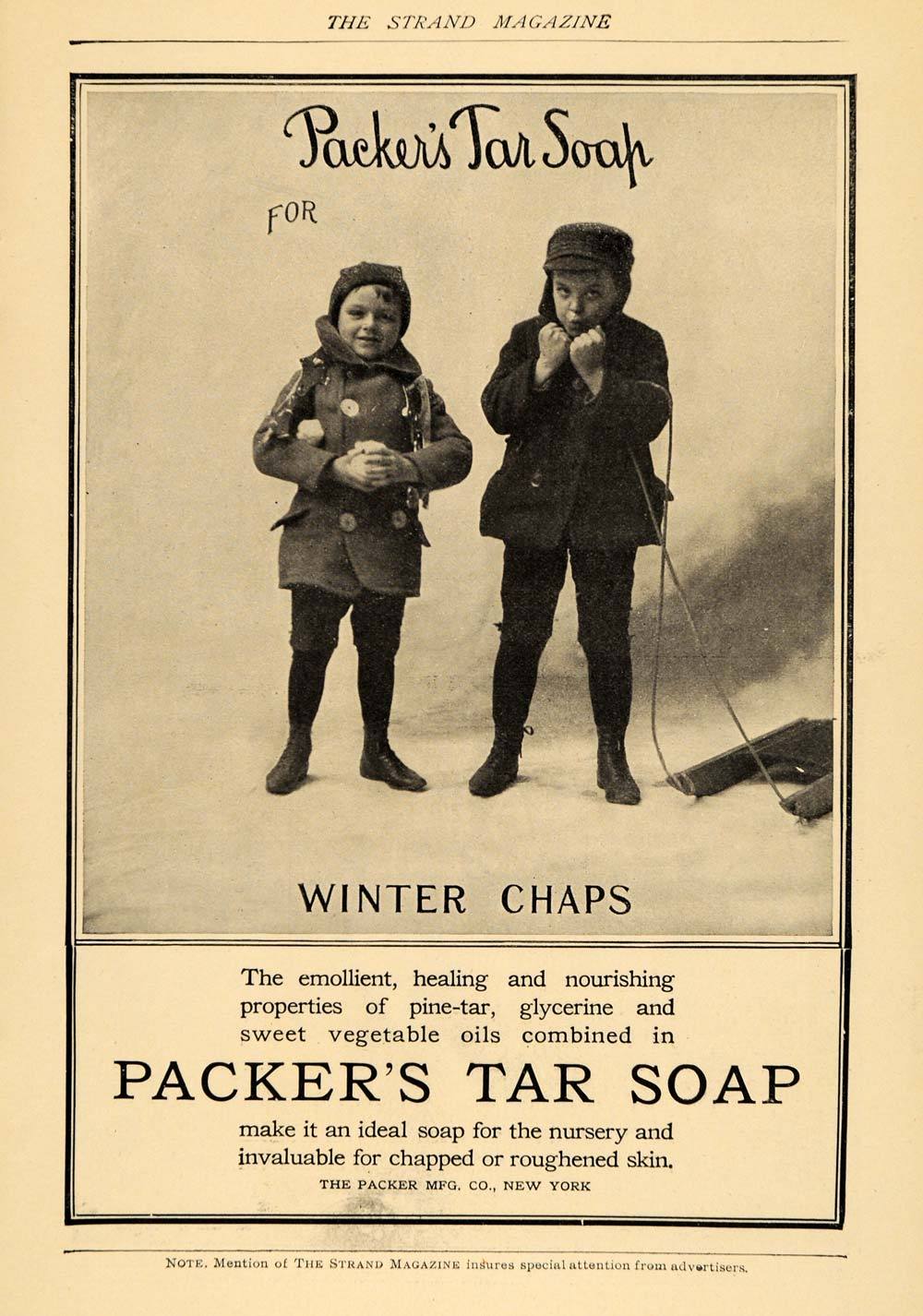
    The smoky-smelling pine tar was made in huge quantities in the era of wooden sailing ships. It was used in the packing material (oakum) that sealed the cracks between planks in ships’ hulls. It has been also used in veterinary for medical purposes. Nowadays, the market for pine tar is small but steady. It is used on baseball bats to improve grip and on horses’ hooves as a protective dressing. It is sometimes used as a protective coating on wood buildings, fences, and other outdoor structures. In Finland pine tar is commonly used for boat and sauna wood preservation. The charcoal is used for cooking, in blacksmiths work, or any other purpose that needs a hot, nearly smokeless fire. Tar was made also from birch trees.

    About the most bizarre uses of the pine tar through the World’s history, was a punishment. It was recorded from the 17th century in USA, about public torture called tarring and feathering, which involved naked man covered in hot sticky tar and then rolled in to feathers or something like that.

    Finnish variety of pine tar products: sauna scent, chocolate, shampoo, liquor, essential oil and soap.

    The Finnish Pine Tar Tale

    The tar was already used during the pile construction period around 4000 – 1800 BC. Pliny, a Roman historian who died in 79, wrote that tar water was already used in ancient Egypt to protect roofs and ships, and to embalm the bodies.

    In Europe, tar was produced in the Middle Ages, particularly in the Prussian region. The decline of forests in Europe led to a shift in the direction of northern Europe. In Finland, tar burning came from Europe and Russia. Its exact time of arrival is difficult to estimate, but tar has been produced in our country for centuries. Already in the 16th century it was exported in small quantities abroad.

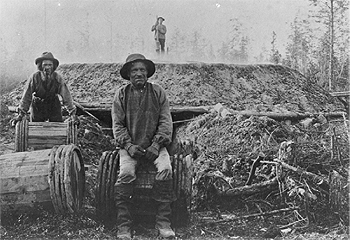
    Tar was Finland’s first export product in the 15th century. Firstly the sea side forests were mainly used for the tar product export. Later in the 18th century the industry moved towards the east Finnish lands, where the forests were still untouched and big part of the pine tar industry was located in the area of Oulu and Kainuu. The process of making pine tar was long and time consuming. The wood was gathered for about four years. Afterwords in spring time, wood pile was created and burned during the June-July months. The fire was burning for about a week long and the heat was between 170-420°C. From one burning usually 40-45 barrels of tar were produced. One barrel was about 125 liters.

    For the transportation of the tar barrels from the east forests, to the west sea side city of Oulu, were used specially made boats. Those boats would carry about 20 barrels of tar and will take up to 2-3 weeks to reach the sea port.

    For a long time, tar burning in Finland had been mainly household burning. Previously, tar was in the houses by the barrel. There were many uses for it. It was used for almost everything that was required to withstand weather variations and humidity. Tar was used, among other things, as a medicine. in the treatment of rashes and as a wood preservative. Tarred wood ceilings are known as shingle roofs. Wooden boats and oars were also salvaged. Both forms of tar use have survived to the present day. Skis and clothes also got their share of tar. Wooden parts of tools, sledges and carts also got a layer of tar on their surface. Let’s use pitch oil produced from it as an insect repellent.

    The important role of tar in people’s lives is evident in the form of the following old Proverbs:

    “If sauna, liquor or pine tar don’t help,
    the disease is death”.


    Pine Tar as a Skin Remedy

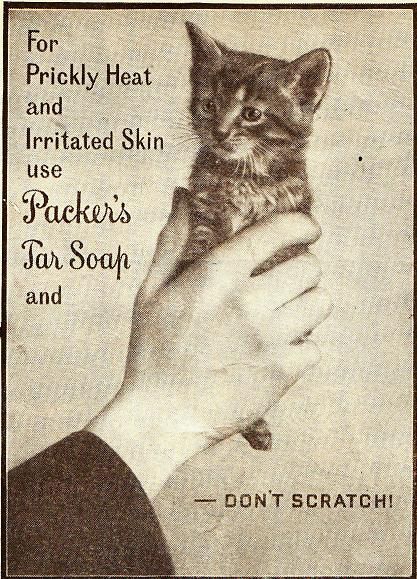
    Pine tar soap is old-fashioned way to heal psoriasis, eczema and other skin rashes. In the use for soap making or any other product for skin use, pine tar needs to be without creosote, which acts as carcinogen. Creosote is by-product of burning minerals during the making process. Finding creosote pine tar is not the easiest thing. I had to order mine from Etsy soap re-seller. To sell the soap for skin condition treatments, one has to label it as a drug and not simply cosmetic. So, this kind of pine tar soaps are simply called “natural soaps”.

    Lighting up the tar bed in Finland

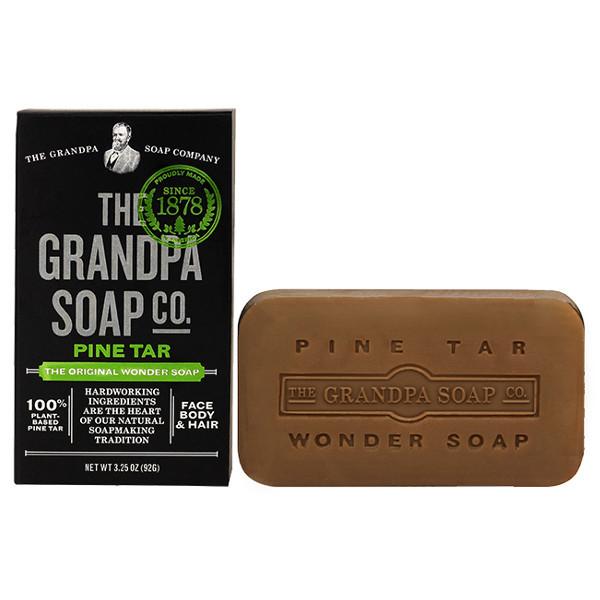
    It is still questionable weather pine tar is beneficial for the skin. There has not been done many studies on the subject, but at least in countries like Finland it has been used for decades in cosmetics. In countries like USA, pine tar is treated as not effective drug, so it is prohibited to claim that pine tar cosmetic products have any health benefits. Although “Beard Soap” or “Grandpa Soap” has long history in the country of removing dandruff and treating eczema, even that there are only 5% of pine tar in such products.

    In Russia the tar shampoo industry is huge. Mainly sold for dry seborrhea with recommended use not more than three times a week and only for problematic skin and scalp irritations. You will notice that the hair grows faster, because the tar in the soap increases blood flow to the hair follicles. The tar is told to have antiseptic properties and removes fungus that is thought to cause itching and flaking. Tar acts as re-generator and softens the course of the disease.

    According to the finish pine tar shampoo or soap consumers, pine tar helps to remove skin irritation and soothes the skin. Summarizing information from specialized forums, it can be concluded that the composition of cosmetics contains tar, which helps to fight oily dandruff. Doctors involved in treating the disease say that the beneficial properties of tar can be used not only for treatment but also for disease prevention. Tar soap is also suitable for intimate hygiene. Researchers found that women using tar soap are less susceptible to gynecological diseases. Soap helps with moss. It’s a good idea to use it after or even during the bikini area. It heals micro wounds and skin is less injured.

    Tar soap, for all its merits, has contraindications. It is better not to use it if you are prone to allergies or have kidney problems. In addition, it is not recommended for people with thin, dry skin. Also to be avoided by pregnant women. If you wash regularly with tar soap, rinse it with cool water, then be sure to apply a nourishing cream. Birch tar is produced by distilling birch bark. In the past, tar had a special, respected place. It was used to heal eczema, ulcers, psoriasis, lichen, and was even taken orally. Tar soap was very popular for its simplicity and ease of use.

    Because of the strong odor, the tar soap is often ignored. If you use it at night, there will be no smell in the morning. Using tar soap can help you get rid of many cosmetic imperfections.


    Common baby, light the Campfire

    The pine tar soap making process is told by many to be difficult, because the tar is quickly thickening. This was not an issue for me. My first batch was velvet and soft, easy to pour. The process is basically the same as any other soap, except for mixing the sticky tar with the oils in between. My second pine tar soap batch turned out more solid. I used both times this tar soap recipe, which is simple and has no palm oil or lard, which I prefer not to use in my products. Apparently by mixing longer the batter gets thicker. And perhaps depending on the oil substance, the batter thickness may vary.

    The main question when making pine tar soap is of course how much tar to add to the soap. It seems that most soap makers use between 10% to 15% tar. Some makers claim in order to have effect, one needs to use 20%. The soap I made with 10% tar has rich aroma, long lasting softness and I have received positive feedback from everyone who has tested it. If you like to purchase my soap, I have it on sale on my Etsy shop.

    Whatever pine tar you find in the store, make sure that it is labeled as 100% pure pine tar. And I would not use other than creosote free substance for any cosmetics. Although we consume much of carcinogenic barbecue or deep fried foods, that does not mean they are healthy. I believe it is hard to imagine that any pine tar substance would be absolutely free of carcinogenic compounds, I would at least try to find the purest pine tar for any soaps used on my skin.


    Pine Tar Soap Recipe

    Liquid & Lye Portion:

    10 oz (283 g) cold distilled water
    3.8 oz (108 g) lye (sodium hydroxide)
    1 teaspoon salt (optional)

    Oil & Pine Tar Portion (30 ounces total):

    18 oz (510 g) olive oil (60%)
    7.5 oz (213 g) coconut oil (25%)
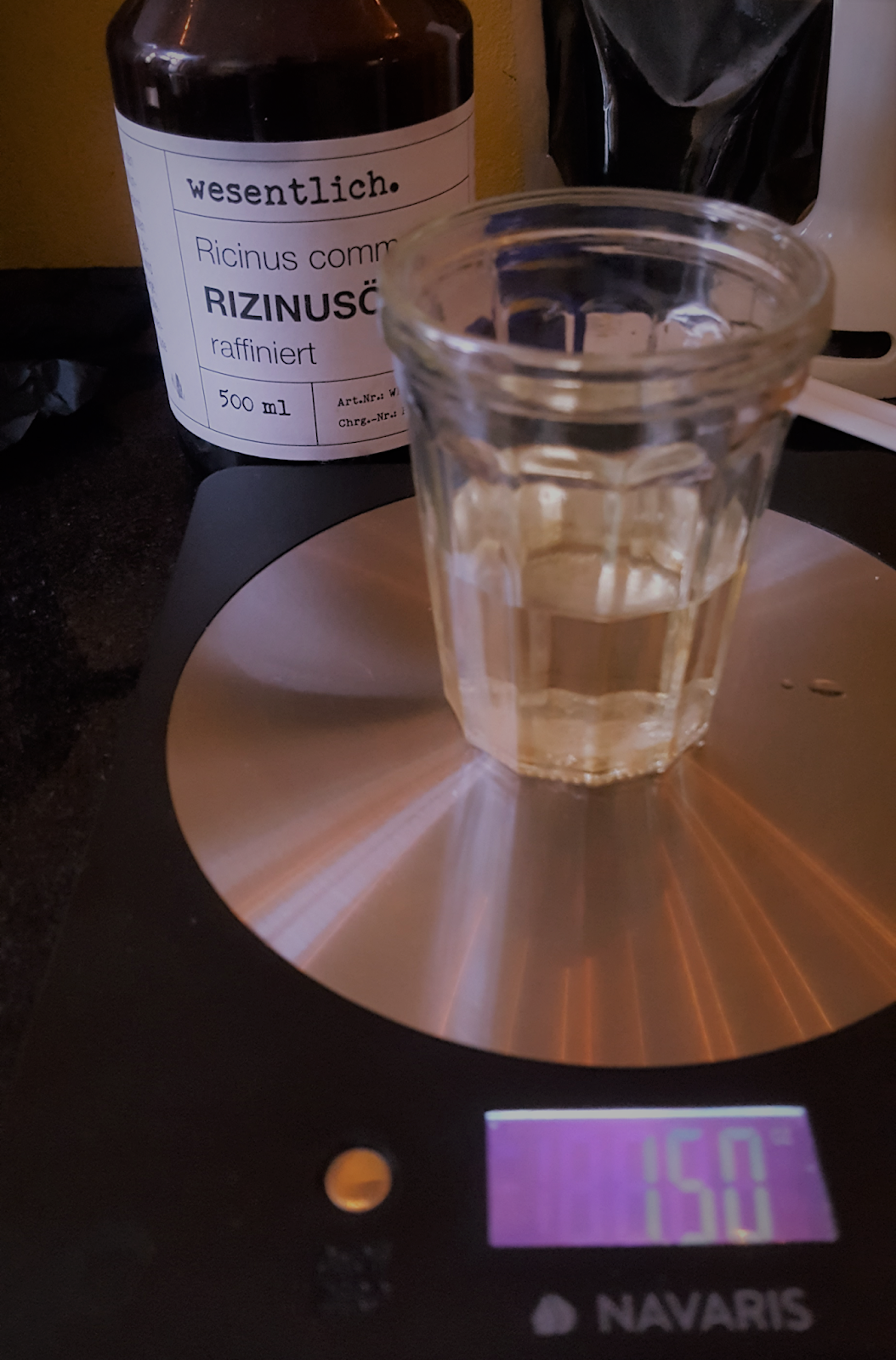
    1.5 oz (43 g) castor oil (5%)
    3 oz (85 g) pine tar (10%)

    Optional Essential Oils for Added Scent:

    0.75 oz (21 g) cedarwood Atlas essential oil
    0.5 oz (15 g) lavender essential oil


    Directions to Make

    Step 1.
    Stir the 1 teaspoon of salt into the cold water. This is to help the soap release from the mold easier and is especially helpful if you’re using silicone molds. Once the salt is stirred in, pour in the lye. Make sure you’re wearing proper safety gear of goggles, long sleeves & gloves. This mixture gets hot fast and for a few moments will give off strong fumes that you should avoid breathing in.

    Step 2.
    Set the lye solution aside to cool. I left mine sitting for several hours until it reached room temperature. (In my house, that’s around 75 to 80 degrees F.) Normally, I work with higher temperatures, but pine tar soap needs cooler ones than normal, to help prevent it from setting up too fast.

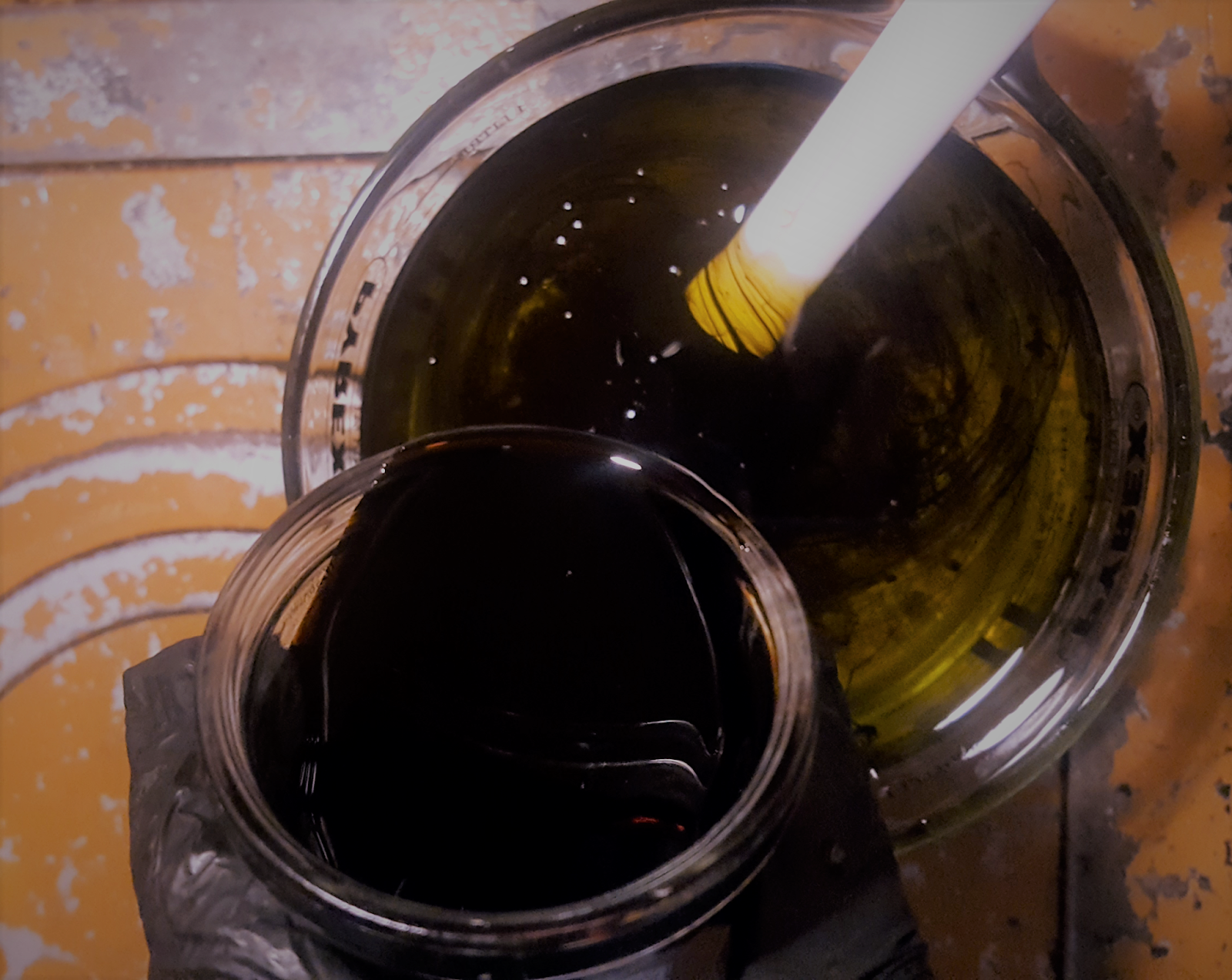
    Pouring the thick pine tar

    Step 3.
    While the lye is cooling: Prepare your mold and measure the oils in a stainless steel, heat proof plastic, or enamel container. Melt the coconut oil just until it turns liquid and mix with the other oils. Set the oils aside until ready to mix. (They can be around room temperature too.)

    Step 4.
    When you’re ready to make your soap, add the pine tar to the oils and stir until blended.

    Step 5.
    Pour in the lye solution and stir with a heavy duty plastic or silicone spoon or spatula. You’ll notice the soap batter get thicker fairly quickly. It may take around 4 to 5 minutes to thicken, stirring by hand, depending on temperatures used.

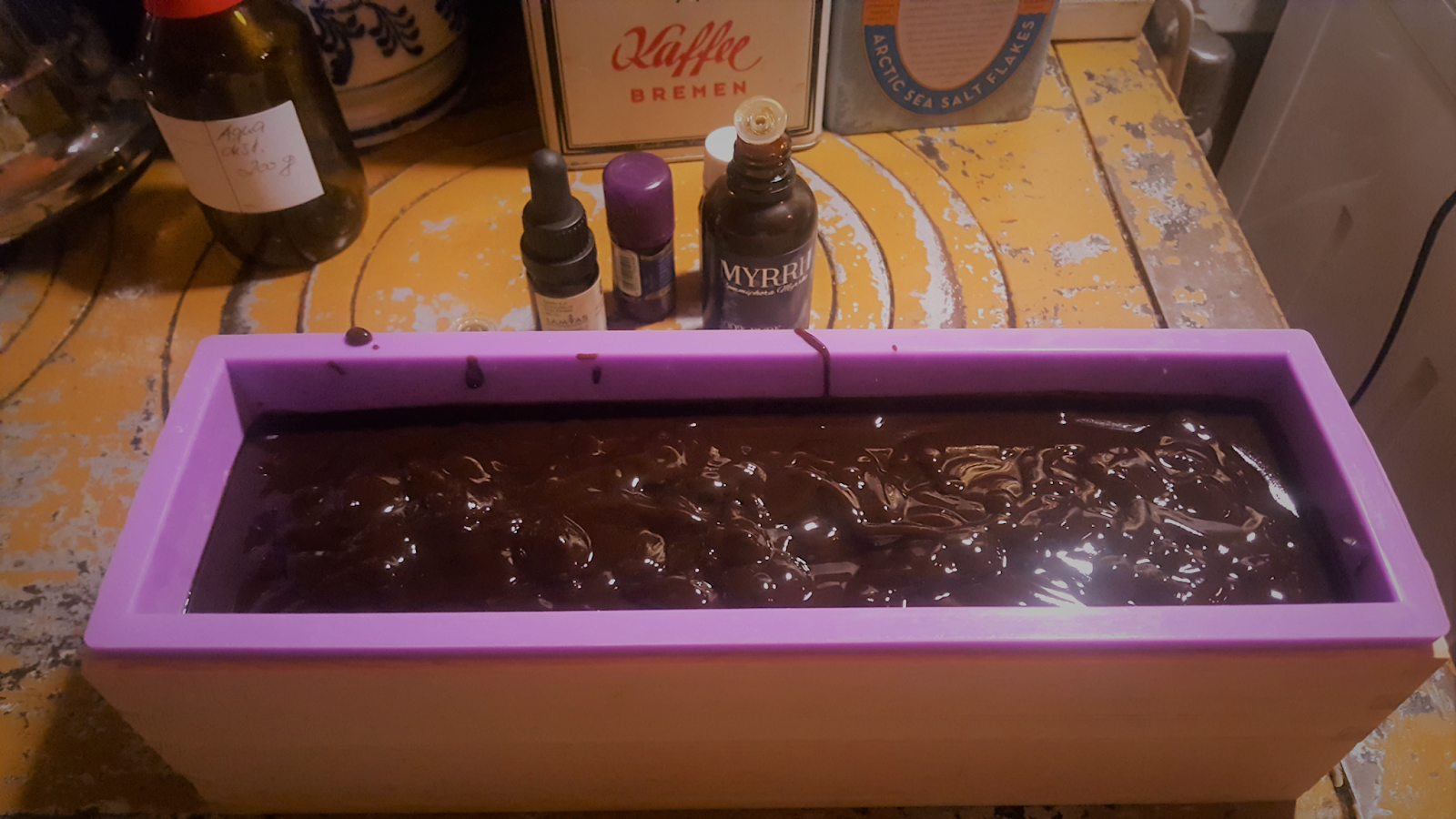
    Ready to sleep in silicone mold pine tar batter
     

    Step 6.
    Pour the thickened soap batter into the mold and set aside. You don’t need to cover or insulate this soap.

    Step 7.
    In 48 hours, you can try unmolding. Pine tar soap starts off a little soft but firms up as it cures in the air. If you added salt to the lye water, it should unmold a lot easier for you than if you didn’t.

    Step 8.
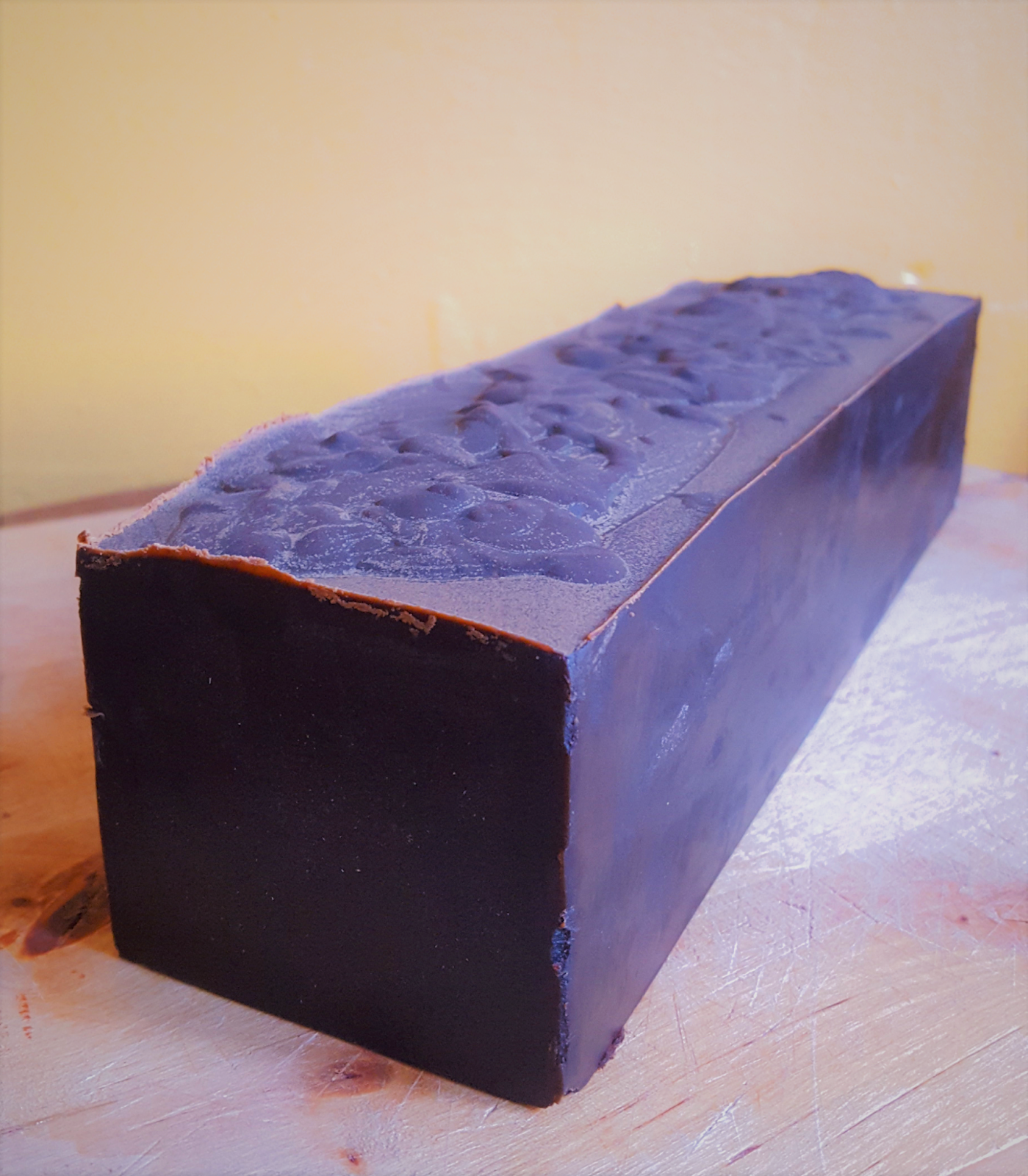
    Slice into bars and let cure for at least four to six weeks.


    Four weeks aged pine tar soap and ready to cut


    More Tar Cosmetic Recipes

    Cleansing tar face mask

    This product is only suitable for greasy or mixed skin complexion. It actively removes harmful substances and impurities through the pores, removes also excess fat and treats acne.

    Grate 0.5 tbsp of 1 tar soap and mix it with a nourishing cream. Apply a thick layer to the entire face, bypassing the eye area. After 15 minutes wash with plenty of cool water.

    Tar and honey face mask

    It has most effective anti-inflammatory processes, alleviates irritation and redness, and cures a variety of rashes. 1 tsp Tar is mixed with 2 tsp of melted honey. Apply tin layer on the skin. After 15 minutes rinse with cool running water.

    Olive oil tar mask

    Because the product contains olive oil, this mask is double perfect for dry skin irritations and rashes.

    Heat 3 tbsp of Honey in a water bath, then mix it with 1 tsp Olive Oil and 1 tsp Birch Tar. Apply a dense coat to all areas of the face. After 15 minutes, wash the mask with warm water and use a nourishing cream after.

    The pine tar aroma filled my tiny city kitchen and I enjoyed the woody campfire feel in the air.

    Tar Cosmetic Recipes:
    https://paahtaja.vuodatus.net/lue/2009/11/tervasaippua
    https://www.thespruce.com/pine-tar-soap-recipe-516687
    http://www.kimberlymcnutt.com/Making-Pine-Tar-Soap.html
    https://fi.cosmedicnorge.com/degot-na-lico.htm

    How to make your own birch tar (in Finnish):
    https://fi.rybinsk.info/2357-21-unusual-way-to-use-birch-tar-in-the-garden.html

    Tar Products:
    http://OncaRitualOfferings.etsy.com
    https://beauty-fi.htgetrid.com/shampun/degtyarnyj/
    https://www.saunahiisi.com/tuote/ikikelpo-saunavoide-mantyterva-ja-hunaja-125-ml/
    https://www.etsy.com/listing/741754997/night-vision-pine-tar-skull-soap?ref=shop_home_active_3
    https://www.sokos.fi/fi/sokos/frantsila-19g-lemminkaisen-aidin-terva-pihka-salva
    https://www.yourvismawebsite.com/hellapoliisi-verkkokauppa/shop/product/rento-loylytuoksu-400-ml-terva?tm=etusivu&sm=
    https://www.osmia.fi/tuotteet/shampoot
    https://www.tokmanni.fi/vm-puuterva-6419726972005

    Resources:
    http://blog.drsquatch.com/pine-tar-soap-benefits/
    https://greatist.com/health/tar-soap-for-psoriasis#types-of-tar-products
    http://www.kainuunterva.com/index.php?option=com_content&task=view&id=14&Itemid=40
    https://thenerdyfarmwife.com/pine-tar-soap-recipe/
    https://classicbells.com/soap/pineTarSoap.html
    https://luontomaisemaymparisto.wordpress.com/tag/terva/
    https://www.thesprucecrafts.com/pine-tar-soap-recipe-516687
    https://www.flickr.com/photos/appalachianheritagesoaps/5948213390/in/photostream/lightbox/